Rule of Law vs Rule by Law
Understanding the Difference That Defines a Nation
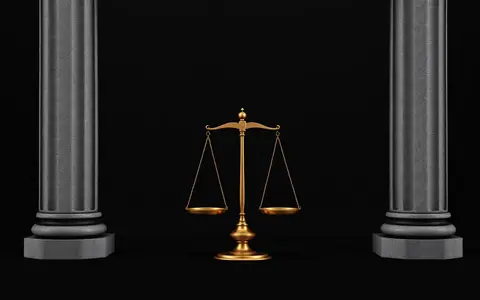
Both phrases contain the same four letters. Both are spoken with the same solemnity by ministers, judges and party officials. And yet the distance between them is the distance between freedom and its imitation.
The rule of law means that law stands above power — that the governor and the governed are subject to the same rules, applied by the same institutions, on the same terms. Rule by law means that law is an instrument of power — a tool the strong use on the weak, entirely legal, entirely one-directional.
Every authoritarian state in modern history has had laws. Many had excellent ones, beautifully drafted, meticulously gazetted. What they did not have was law that could be turned around and pointed at those who wrote it.
Ask not whether a country has laws. Ask whether the most powerful person in it can be made to lose a case.
— Master Chimbala
The four tests
The distinction is not abstract. It can be tested, and the tests are practical enough for any citizen to apply.
Test one: does the law bind the lawmaker? Under the rule of law, the president, the minister and the ruling party are inside the legal system, not above it. Under rule by law, the law applies downward only. The clearest symptom is selective enforcement — the same offence prosecuted vigorously in opposition hands and overlooked in friendly ones.
Test two: is the law knowable in advance? Law must be public, prospective, clear and stable enough for citizens to plan their lives. Rule by law prefers vagueness, because vague law is discretionary law, and discretion is where power lives. Statutes criminalising "conduct likely to cause alarm" or "false information" are rarely vague by accident.
Test three: is there an independent forum? A right without a court is a preference. Judicial independence is not about judges being unaccountable; it is about their tenure, budget and promotion being insulated from the outcomes they deliver. Watch appointments, transfers and funding — these tell you more than any constitutional clause.
Test four: is process observed when it is inconvenient? Any state observes due process for the harmless. The rule of law is measured by what happens to the unpopular defendant, the hostile journalist, the inconvenient litigant. Procedure exists precisely for those cases; it is decorative everywhere else.
How the slide happens
Countries rarely announce the abandonment of the rule of law. The transition is procedural, incremental and almost always framed as necessary.
It begins with emergency. A genuine crisis justifies extraordinary powers, and the powers are granted with sincerity. Then the emergency ends and the powers do not. They are renewed, then normalised, then extended to circumstances no one imagined at the outset.
Next comes the capture of the appointment process — not the abolition of institutions but the careful staffing of them. The commission still exists. Its members are simply chosen by one office. The oversight body still reports. It reports to the person it oversees.
Finally comes the language. Compliance is renamed patriotism, dissent is renamed destabilisation, and legality is offered as though it settled the question of justice. At every stage the paperwork is impeccable. That is the point.
Why this matters beyond the courtroom
There is a tendency to treat the rule of law as a concern of lawyers and civil society. It is in fact an economic condition. Investment is a bet on enforceability. Contracts, land titles, licences and judgments are worth what the legal system will actually deliver under pressure, not what the statute promises on paper.
Where law is an instrument of power, capital behaves accordingly: it stays short, stays connected, and prices in the cost of relationships. Where law binds power, capital can afford to be patient — and patient capital is what builds factories, hospitals and universities rather than deals.
The rule of law is also the precondition for every other right. Free expression, fair trial, property, assembly and equality before the law are not self-executing. Each depends on a forum where a citizen can compel the state to answer.
What citizens can hold onto
Constitutional health is maintained by ordinary vigilance in unglamorous places: the integrity of appointment processes, the independence of audit and prosecution, the willingness of professional bodies to speak, the survival of a press that can report a judgment before it is appealed.
Ask of every new law three questions. Who does it constrain? Who decides when it applies? And what happens when the person applying it is the one who benefits?
A nation is not defined by whether it has law. It is defined by whether law has it.
References
- Bingham, T., The Rule of Law (2010).
- Dicey, A. V., Introduction to the Study of the Law of the Constitution (1885).
- United Nations, 'What is the Rule of Law?', Office of the Secretary-General.